
If you invest in rental property, a DSCR loan can be one of the simplest ways to finance your next purchase or refinance. Instead of qualifying with tax returns and pay stubs, a DSCR loan qualifies mainly on the income the property itself produces.
What Is a DSCR Loan?
DSCR stands for debt service coverage ratio. It compares a property’s monthly rental income to its monthly debt payment, which includes principal, interest, property taxes, insurance and any HOA dues.
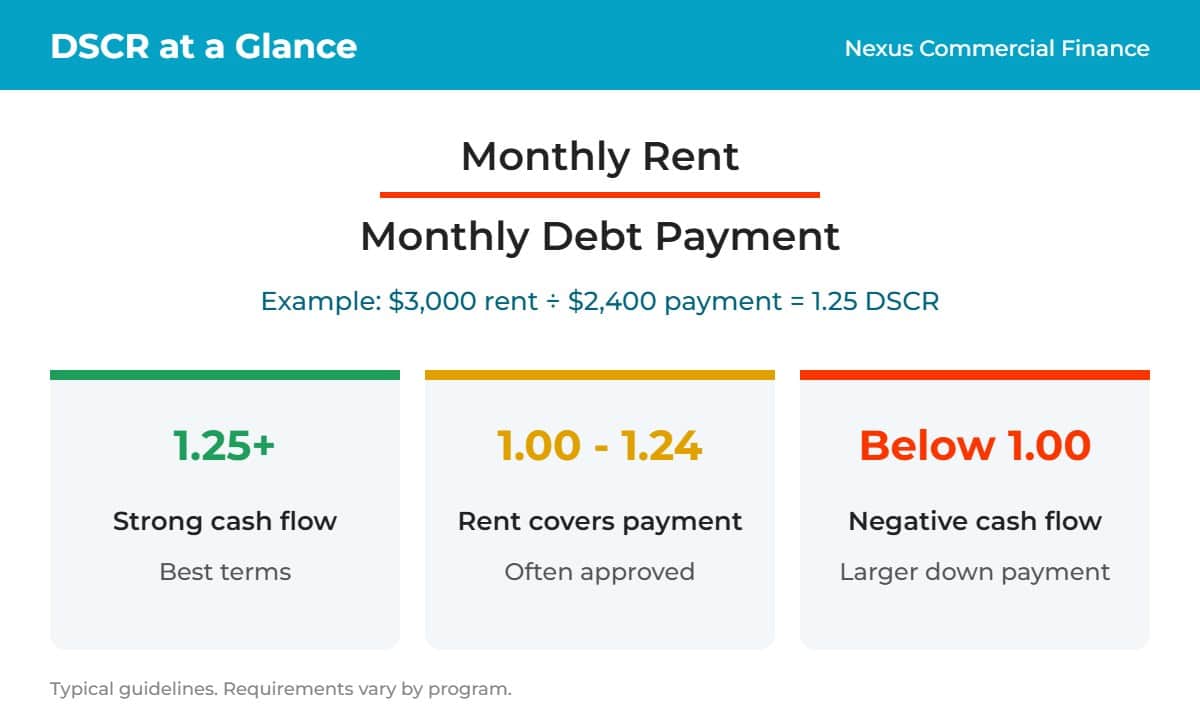
DSCR = Monthly Rent ÷ Monthly Debt Payment
For example, if a property rents for $3,000 a month and the total payment is $2,400, the DSCR is 1.25. In plain terms, the rent covers the payment 1.25 times.
What DSCR Do Lenders Look For?
Most lenders like to see a DSCR of 1.25 or higher. At that level, the rent covers the payment with room to spare, and investors usually qualify for the best rates and terms.
A DSCR between 1.00 and 1.24 means the rent still covers the payment, just with a thinner cushion. Many programs approve these loans, sometimes with slightly different pricing.
When the DSCR falls below 1.00, the rent does not fully cover the payment. Some programs will still lend, but they usually ask for a larger down payment or a higher rate. Every program sets its own guidelines, so it is always worth running the numbers on your specific property.
Who Is a DSCR Loan Good For?
DSCR loans are a natural fit for self-employed investors. If your tax returns show lower income after write-offs, a traditional mortgage can be hard to get, even when your properties perform well. A DSCR loan looks at the property instead of your personal income.
They also work well for investors who are growing a portfolio and have reached the limit on conventional mortgages, and for anyone who wants to buy in an LLC to keep their properties separate from personal finances.
Short-term rental owners can benefit too. Some programs accept projected or historical Airbnb and vacation rental income when calculating DSCR.
What You Will Typically Need
On a purchase, expect to put down around 20% to 25%. Lenders will also review your credit, and many programs start with scores in the mid 600s or higher.
To confirm the rental income, you will provide a signed lease, or the appraiser will estimate market rent for the property. Most lenders also want to see cash reserves set aside after closing, often enough to cover several months of payments.
Keep in mind that DSCR loans are for investment properties only. They cannot be used for a home you plan to live in.
DSCR Loan vs. Conventional Mortgage
A conventional mortgage is built around you: your income, your tax returns and your debt-to-income ratio. A DSCR loan is built around the property and the cash flow it produces.
That difference usually means less paperwork and a faster path to closing. Rates are typically a bit higher than conventional loans, but for many investors the flexibility is well worth it.
Run Your Numbers With Nexus
Nexus Commercial Finance provides DSCR loans for real estate investors in San Jose and nationwide, along with bridge and construction financing for your next project.
Not sure where your property lands? Contact our team and we will help you run the numbers and see how much it can qualify for.
This article is for general education only. Loan terms, rates and approval are subject to underwriting and program guidelines.